The Relationship Between Electricity Prices and Heatwaves: How Global Warming Is Stress-Testing Europe’s Power System.
Introduction
Now that we have left the first week of July behind, it seems that temperatures are returning to more typical levels for this time of year, high, but not extreme. Everything suggests that, at least for the week ahead, we can leave behind, for now, the days with maximum temperatures above 45°C and the sweltering nights with minimums above 27°C.
Unfortunately, however, this summer of 2025 is once again laying bare a climate reality that is becoming harder and harder to ignore. And yet, there are still those who, driven by political gain or economic interests, cling to denialist narratives, claiming that such situations already happened thirty or forty years ago. But reality, no matter how much some try to distort it, is stubborn. The data speaks for itself: over the past few weeks, temperatures have been, at times, between 4 and 6 degrees higher than the historical average for these dates over the past hundred years.
Among other consequences, this first official heatwave of the summer of 2025 has placed enormous pressure on power systems across Europe. In a report published this week by EMBER, an independent, non-profit think tank specializing in energy sector analysis, it is made clear that the heatwave, which has swept across much of the continent between late June and early July, has caused a sharp increase in electricity demand in countries both in the north and the south of Europe. This sudden surge in demand has led to several consequences. Among them, the report highlights that electricity prices have soared to much higher-than-usual levels, driven not only by the increased use of air conditioning and cooling systems in homes, businesses, and industries, but also, crucially, by the reduced performance and production capacity of nuclear plants, cogeneration facilities, and combined-cycle power stations, all of which have been directly impacted by the rising temperatures.
The challenge faced by nuclear and thermal power plants to ensure electricity generation in the current context of global warming.
When we talk about climate change and the sustained rise in global temperatures, the public debate often focuses on environmental consequences or the need to reduce greenhouse gas emissions. However, there is a fundamental aspect that is rarely discussed and is becoming increasingly relevant: climate warming and extreme temperatures have a very negative impact on the electricity generation capacity of nuclear, cogeneration, and combined cycle power plants, which, in the current scenario, remain one of the essential pillars of the energy generation systems we rely on.
Electricity is not a primary source of energy, but rather the result of a transformation process from other forms of energy, whether solar radiation, wind, water, hydrocarbons, or uranium. In this transformation process, the amount of electricity we can obtain will inevitably always be lower than the initial amount of available primary energy. This is an unavoidable fact, regardless of the technological advances we may have now or in the future. The maximum efficiency that can be achieved in electricity generation will always be below 100%, due to the fundamental principles established by the laws of thermodynamics.
And what does this mean in practical terms for a nuclear or thermal power plant? To understand it, we need to know that these types of plants are essentially made up of two separate circuits. The primary circuit is a closed-loop system where, through the combustion of gas or the nuclear fission reaction, steam is produced at high temperature and pressure. This steam drives a turbine, which is connected to an electric generator responsible for transforming mechanical energy into electricity. On the other hand, there is the secondary circuit, whose function is to cool down the steam from the primary circuit once it has released its energy, using large heat exchangers. This cooling allows the cycle in the primary circuit to start over again. This cooling process is usually carried out using water drawn from external sources (rivers, lakes, or the sea) along with ambient air, and the temperature at which this water and air are captured is a key factor.
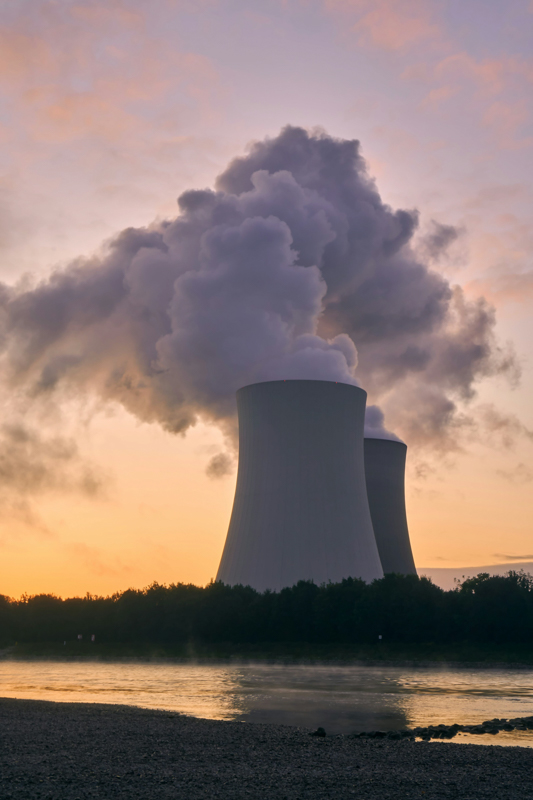
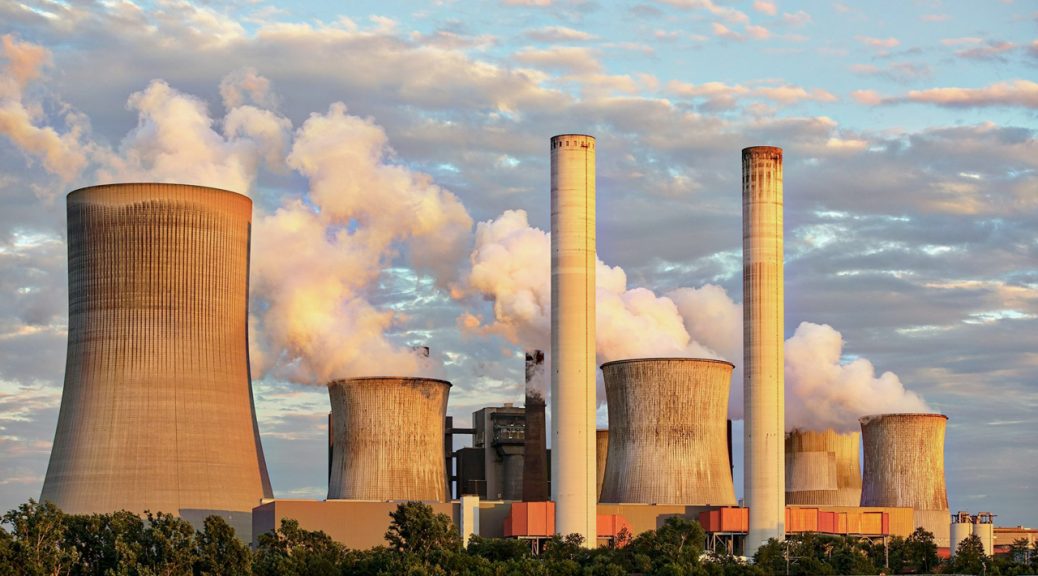
Why is the external temperature so important in a power plant of this type? Because the plant’s efficiency depends directly on the temperature difference between the steam in the primary circuit and the cold source, which is the water or air used to cool the system in the secondary circuit. If this cold source, such as river water or ambient air, reaches higher-than-usual temperatures due to climatic factors, as happens during a heatwave, then the plant’s efficiency in generating electricity decreases because the ability of the water and air in the secondary circuit to cool the steam in the primary circuit is reduced. And the key element for carrying out this cooling process in nuclear and thermal plants is the large cooling towers they are equipped with. In these plants, the water used in the secondary circuit to cool the steam from the primary circuit is circulated through the cooling tower. Once the water in the cooling circuit has absorbed the heat from the primary circuit steam, it is directed to the cooling tower, where it is cooled by coming into contact with the external air as it falls in the form of fine droplets inside the tower. During its fall inside the cooling tower, a small portion of this water, typically between 1% and 3%, evaporates. It is here, in this evaporation process, that the key lies. This is because a significant amount of energy is released during evaporation due to what is known as the latent heat of phase change, which cools the remaining water that does not evaporate. This cooled water, once it reaches the bottom of the tower, is collected and reused again in the secondary circuit. Only the evaporated fraction needs to be replenished by drawing new water from the natural environment.
However, during heatwave events, cooling in these towers becomes a major challenge for the operation of power plants, as the water cooling process is affected by two factors. The first factor is that when both the air temperature and the temperature of the water drawn from rivers are higher than usual, the system’s cooling capacity is reduced, leading to a decrease in the plant’s efficiency, since the plant can generate less electricity for each unit of thermal energy consumed. The second factor that also affects plant performance is not physical but regulatory. It must be taken into account that the maximum temperature at which the plant can return water to the river, lake, or sea is set by environmental regulations. Each country sets its own legal limits, either in the form of an absolute maximum temperature or a thermal gradient between the intake temperature and the discharge temperature. For this reason, when the water drawn from rivers is already close to or exceeds this legal threshold, as can happen during heatwaves, the plant is forced to reduce its production capacity or even shut down completely in order to comply with environmental legislation.
Thus, we are faced with a direct consequence of climate change and global warming that is rarely discussed but affects all electricity generation technologies. High temperatures not only increase electricity demand, but also negatively impact the capacity to produce electricity, leading to higher production costs precisely at the times when demand is at its highest.
The impact of the heatwave on electricity prices in Spain, France, and Germany.
In light of this scenario, it is useful to understand how the recent heatwave has affected the electricity systems of countries such as Spain, France, and Germany, and how these circumstances have directly impacted the electricity prices that we all ultimately pay.
What has become clear in recent weeks is that this first heatwave of the summer has had a direct and significant impact both on electricity consumption and on electricity prices. Over the past days, as temperatures soared beyond 35, 40, and even 45 degrees Celsius in many areas of Germany, France, and Spain, electricity consumption has surged, driven primarily by the widespread use of air conditioning and cooling systems in homes, businesses, and industries. According to the EMBER report, this heatwave led to an average increase in electricity demand of up to 14% in Spain, 9% in France, and 6% in Germany compared with the previous week, figures well above what would typically be expected for this time of year.
The data recorded over the past few days show that this sudden surge in demand has had an immediate impact on wholesale electricity market prices. What the EMBER report makes clear is that, although the situations in Spain, France, and Germany differ, the reality is that all three markets have experienced significant increases in electricity prices as a direct consequence of this heatwave.
In Spain, the starting situation was already complex, as the electricity system was under strain even before the heatwave, following the grid failure experienced in May, an episode that exposed certain structural weaknesses. This pre-existing tension was further aggravated by the heatwave, which led to an increase in electricity demand of up to 14% between June 24 and July 1. This sudden surge in demand had a direct impact on wholesale day-ahead market prices, with the average daily price reaching €93/MWh at the end of June, marking a 14% increase compared to the previous day, and with peak prices climbing to €159/MWh between 9:00 p.m. and 11:00 p.m. on June 26, coinciding with the hottest night of this heatwave on the Iberian Peninsula. Despite this sharp rise in demand, Spain’s strong hydropower reserves played a key role in helping to contain the escalation of prices, preventing them from soaring to the extreme levels seen in other markets such as France or Germany. Without this hydropower support, the system would have faced even greater stress. Generation capacity was particularly compromised during peak hours, when massive air conditioning demand coincided with the complete drop-off in solar generation after sunset, leading to sustained high prices throughout both day and night. All of this pushed the Spanish electricity market price well above the average of previous months, when typical values hovered around €70/MWh. These figures highlight the vulnerability of Spain’s electricity system in the face of extreme weather events and illustrate the growing difficulty of maintaining the balance between energy supply and demand in the context of a global warming scenario that increasingly amplifies such imbalances.
In the case of France, a country where nuclear energy is the cornerstone of the electricity system, the situation was equally critical, but for different reasons. France has one of the largest nuclear fleets in Europe, with power plants spread across the country that usually cover a significant portion of national electricity demand. However, the high temperatures of this heatwave created an unexpected vulnerability: 17 of France’s 18 nuclear power stations were forced to reduce their output or partially shut down because these facilities depend on large volumes of water for cooling. With river temperatures, such as those of the Loire, the Garonne, and the Rhône, rising well above usual thresholds, these plants could no longer guarantee the necessary cooling to operate safely. This situation led to a reduction of up to 15% of available nuclear capacity and pushed the French electricity market to register prices close to €400/MWh during peak hours. The report also notes that, on average, prices more than doubled (+108%) compared to the days before the heatwave, highlighting the growing importance of environmental constraints in the technical viability of nuclear technologies.
Finally, in Germany, the situation was even more extreme. The country recorded the sharpest increase in electricity prices among the three major markets analyzed. According to the EMBER report, electricity demand grew by 6%, and in parallel, prices soared by +175% compared to previous days. Prices exceeded €400/MWh during peak hours, with an absolute maximum reaching €476/MWh in some critical moments. Despite having a large installed capacity of solar energy, which managed to cover up to 39% of demand during midday hours, the system faced a major challenge: the lack of flexible capacity to meet energy needs during sunless periods, especially during hot nights. It was in these hours that gas-fired power stations became the main source sustaining the grid. However, these plants also suffered efficiency losses due to high temperatures, similar to the French nuclear plants, as they were unable to dissipate heat effectively. All of this further worsened the price escalation and exposed the vulnerability of a system highly dependent on weather conditions and with limited flexibility to absorb large demand peaks.
Main causes of electricity price increases during heatwaves in European power systems.
There is no single cause that can fully explain the recent increases in electricity prices observed across various markets within the European power system over the past week. The causes are multiple, closely interconnected, but they all share a common denominator: the inability of current systems to respond quickly and flexibly to the new climatic and energy scenarios we are facing.
This issue, resulting from the sustained rise in temperatures and the consequent reduction in the efficiency of nuclear and thermal power plants, adds to another longstanding structural challenge that European electricity systems have been grappling with for years: the lack of flexibility in electricity generation systems, especially since the massive integration of solar photovoltaic energy into the daily energy mix. This lack of flexibility is reflected in the large price differences between daytime and nighttime hours. During sunny hours, photovoltaic generation is abundant and low-cost, helping to moderate prices. But when the sun sets, solar production disappears entirely while demand can remain very high, especially during heatwave scenarios like the ones experienced this summer. This mismatch between supply and demand is one of the key factors that puts pressure on the system and explains part of the current price spikes.
In this context, there are two key factors that explain why this combination of heatwaves and lack of flexibility has been directly responsible for the recent increases in electricity prices:
First, high nighttime temperatures cause electricity demand to remain elevated even during the night, a phenomenon increasingly common due to the rise of so-called tropical nights, when temperatures do not fall below 25 or 27°C. These conditions lead many households, businesses, and industries to keep air conditioning or refrigeration systems running throughout the night, preventing the usual drop in electricity demand that used to occur after 10 p.m.
Second, high temperatures not only increase demand but also reduce the capacity and efficiency of key electricity generation sources. Both nuclear and thermal plants experience reduced efficiency because the air or water used to cool steam systems is already too warm to dissipate heat effectively. This means that, precisely when more energy is needed to meet the increased demand caused by the heat, these systems are less capable of producing it, or do so with lower efficiency.
For all these reasons, the combination of sustained nighttime demand driven by high temperatures and the reduced efficiency of generation technologies clearly amplifies price increases and highlights the growing vulnerability of European electricity systems in the face of an increasingly intense and difficult-to-manage global warming scenario. This tension becomes especially acute during the most critical moments of the day, when the sun sets and photovoltaic production plummets. It is in these moments, with demand still high and supply limited, that the most extreme price differentials occur and the physical and structural limitations of the electricity system become most evident.
Roadmap of actions for Europe’s energy future to mitigate the effects of global warming.
Therefore, based on everything discussed so far in this article, it becomes clear that the current problem caused by rising temperatures in the electricity generation system is multifaceted and complex to solve. However, as with any technical challenge, solutions do exist. It is crucial to keep in mind that these solutions require time to be designed, deployed, and for their effects to become visible, as well as significant financial investment and, above all, social and political will to carry them out. There is no room for half-measures or delays: decisive action is needed.
Faced with this reality, and in order to tackle an increasingly recurrent situation marked by the sustained rise in temperatures and worsened during heatwave episodes, the report published by EMBER highlights three priority lines of action that Europe should urgently adopt to strengthen the security, flexibility, and resilience of its electricity systems:
Integrating Energy Storage Systems into the Renewable Model.
The first key measure involves evolving the current electricity system, which has already integrated renewables as the main source of electricity generation during daylight hours, towards the decisive integration of energy storage systems within this new model. Both electric batteries and gravity-based storage, through reversible hydropower plants, will be essential tools to achieve this goal. These systems are crucial for storing surplus solar energy produced during the central hours of the day and making it available in the evening, when photovoltaic generation drops but demand remains high, especially during prolonged heatwaves that stretch demand into the night. Without this storage capacity, electricity systems will continue to suffer from imbalances between supply and demand, with the resulting pressure on prices and risks to grid stability.
It is also worth highlighting that, in the case of electric batteries, several recent reports point to an imminent transformation driven by rapidly falling costs. Throughout 2024, battery prices fell by more than 50% compared to 2023, and in the first quarter of 2025, China recorded a further 30% drop. With this sustained trend, all forecasts agree that we are moving closer to being able to deploy photovoltaic installations with storage capable of covering 24-hour energy needs, with kWh costs clearly below those of conventional generation systems. This technological revolution will open, within 2 to 3 years, a new scenario in which self-consumption installations with storage, both for businesses and homes, could cover virtually 100% of energy needs at much more competitive and stable prices. This represents a structural shift in the electricity system in the short and medium term, accelerating the transition towards a decentralized, renewable, more resilient system with significantly lower energy costs compared to the current centralized, fossil fuel-based model.
Strengthening and expanding European electricity interconnections.
The second measure involves decisively strengthening and expanding electricity interconnections between countries, an essential action for advancing towards a safer, more resilient, and more efficient European energy system. Having a robust and well-connected grid allows for balancing production and consumption imbalances that inevitably arise between different territories. This exchange capacity makes it possible for the energy surplus from one region, especially during periods of maximum renewable generation, to supply areas experiencing deficits, whether due to a lack of natural resources caused by weather conditions or incidents affecting local generation capacity.
This interconnection and mutual support capability becomes key in situations of temporary energy stress, such as those that occur during heatwaves, when electricity demand rises suddenly and across the board, or when certain generation technologies, such as nuclear or thermal power plants, face operational limits due to environmental factors like insufficient cold water for cooling or excessively hot ambient air. Without adequate interconnections, situations like the recent heatwave will continue to occur, leading to price imbalances, grid tensions, and, in extreme cases, supply disruptions. In short, interconnections are essential for a modern, sustainable European electricity system. Without proper grid interconnection between countries, the energy transition and the fight against climate change will be severely constrained.
Promoting demand flexibility and distributed self-generation.
The third measure highlights that all European electricity systems should focus on enhancing demand-side flexibility, an often-overlooked but fundamental aspect for ensuring the stability of a highly renewable energy system. It is not only about transforming how we generate energy but also about how and when we consume it.
This flexibility can be encouraged, firstly, through dynamic pricing that incentivizes consumers to shift part of their consumption to periods with greater availability of renewable energy. However, this is only part of the solution. To this must be added the progressive and widespread introduction of medium-capacity batteries, between 10 kWh and 50 kWh, at the domestic level, which would not only maximize self-consumption but also reduce the impact of demand peaks on the general grid.
In addition, the widespread adoption of self-generation and energy storage systems in industries and service sector businesses, such as marinas, airports, hotels, campsites, shopping centers, or golf courses, could give rise to the creation of local energy hubs. These hubs would not only improve the resilience and flexibility of the system but also enable the formation of energy communities and help reduce the average energy cost per kWh for the businesses involved, thereby improving their economic competitiveness. This distributed generation model with storage would not only ease pressure on the grid during times of peak demand but would also help accelerate the energy transition towards a more decentralized, more efficient system, better prepared to face the challenges of an increasingly demanding climate change scenario.
Conclusions
What this entire scenario clearly reveals is that if we want to avoid situations like those experienced during the recent heatwave, marked by soaring electricity prices and operational issues in nuclear and thermal power plants due to extreme temperatures, we must accelerate the energy transition towards the decarbonization of the electricity system. This will only be possible through a determined expansion of renewable energy sources combined with the implementation of energy storage systems capable of ensuring supply continuity during hours without solar radiation.
Moving in this direction will progressively reduce dependence on cogeneration plants, combined cycle plants, and nuclear power, thereby minimizing the vulnerabilities these technologies present in extreme climate scenarios. With a system primarily based on renewable energy and storage, many of the problems related to price spikes and reduced generation capacity described throughout this article could be largely avoided.
It is for reasons like these that society must understand that the energy transition is not simply about swapping one set of technologies for another. It is a genuine process of structural transformation of the energy system, one that must be driven collectively. This process must enable lower energy production costs, guarantee the security and stability of the grid, and adapt energy generation, storage, distribution, and consumption to a global context profoundly shaped by climate change.
Only with this broad perspective and decisive action will Europe’s electricity systems be able to withstand the growing impacts of global warming while ensuring a stable, affordable, and sustainable energy supply for society as a whole.