The Energy Transition in the Mediterranean Maritime Sector.
This week, I had the opportunity to take part in the session ‘Navigating Transformation in the Mediterranean Maritime Sector’, as Second Vice President of ANBE (National Association for Electric Boats). The event was part of the MedaLogistics conference series, organized by ASCAME (Association of Mediterranean Chambers of Commerce and Industry), as part of SIL Barcelona 2025.
The session, moderated by Marilena Estarellas (Manager of ANBE), featured prominent professionals such as Adrià Jover (President of IEMA – International Electric Marine Boating), Rosina Motilla (Legacy Project Manager at the Barcelona Capital Náutica Foundation), and Ralph Fakhoury (Vice President of Green Marine Services).
Throughout the session, drawing from my professional experience in the recreational marina and commercial ports sector, and particularly through the projects I’m currently developing in collaboration with the company Domini Energia, I strongly advocated for one key idea, which, I believe, should be the cornerstone of any future strategy for the nautical sector:
If we want the energy transition in recreational and commercial ports to become a reality within the next decade, and we want the fleet to shift from combustion engines to electric propulsion, then ports and marinas must lead the way by immediately beginning their own energy transition processes to prepare for the energy model that will soon become the norm.
The key point is clear: the transformation must begin on land, not at sea.
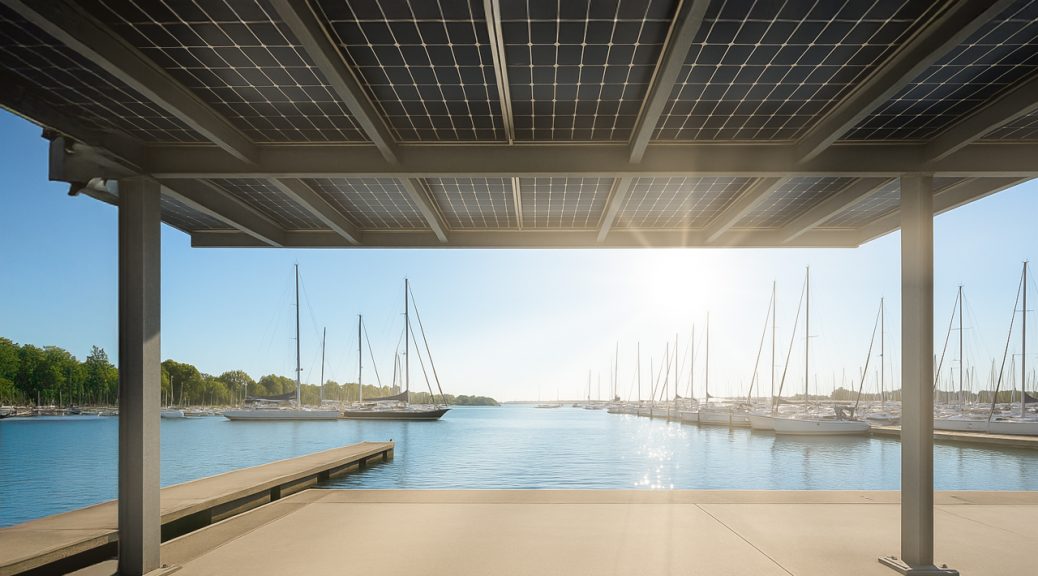
This energy transition should not be seen merely as a necessary step to accommodate electric vessels in the near future. The maritime and port sectors, like many other industrial sectors in the country, must undertake their own energy transition, through renewable sources, to generate a significant portion of their own electricity. This would reduce dependency on the conventional power grid and ensure cost stability in a future where energy will become increasingly expensive and less predictable. This kind of energy sovereignty will not only protect them from market volatility but will also offer a decisive competitive advantage.
Since, if ports and marinas are able, in a short period of time, to generate, store, and manage their own energy, and do so in collaboration with surrounding businesses through the creation of energy communities, the result will be that the price per kWh they can offer will be significantly lower and more competitive than that of the traditional electricity grid. And that changes everything. Because at that point, what will happen is not only that powering vessels with electricity will be much more economical than using diesel, as it already is today, but that this fact will become the key economic factor and the true driving force behind the transformation of the sector, turning ports and their surroundings into genuine energy hubs. This will give ports a competitive economic advantage that will likely also serve as a catalyst for the full development of other sectors, such as green hydrogen production, an increasingly important energy vector, or other economic and industrial sectors that, thanks to these favorable conditions, may find in this environment a real opportunity to establish themselves, grow, or reinvent their models.
Indeed, in the specific case of hydrogen, having access to electricity at a much more competitive cost than at present would make green hydrogen production significantly more viable and feasible. Since its production process, based on the electrolysis of water, depends fundamentally on the price of electricity, the availability of energy at a competitive rate would make hydrogen production in port areas more viable and profitable than it is today, thereby opening the door to the development of this sector at an industrial level.
Therefore, if ports and marinas are able to look beyond the present moment and commit now by investing in renewable energy production, regardless of the current number of electric boats they currently host at their facilities, they will not only be laying the foundations that will provide them with competitive advantage in the near future and strengthen their economic operations, but they will also be driving the development of the electric, hybrid and hydrogen-powered boat industry, and contributing to the creation of a true industrial ecosystem linked to sustainable boating.
All of this delivers a clear message: the time to act is now. Whoever leads first will set the pace. And this is no longer just a matter of sustainability, it’s a matter of business strategy.
The energy transition must happen now, not when the fleet is already predominantly electric.